
Why Burst Pipes Strike Shoreline's 1940s–1970s Housing Stock
Large sections of Ridgecrest, North City, and Echo Lake were built during Shoreline's rapid post-WWII growth boom. Many of these homes still contain sections of aging copper piping prone to pinhole corrosion, legacy galvanized steel risers, or uninsulated hose bibbs and crawlspace supply lines that split during Puget Sound Arctic blasts. When a pressurized line ruptures behind a bathroom vanity or kitchen sink, water migrates rapidly along joist bays and down into lower-level ceilings.
Immediate Steps While Waiting for Dispatch
Before restoration crews arrive, turn off the main water shutoff valve (commonly located near the front foundation wall, garage, or street-side meter box) and open a low faucet to relieve line pressure. For a complete hour-by-hour checklist, see our guide on the first 24 hours after a burst pipe in Shoreline.
How Independent Contractors Mitigate Burst Pipe Damage
- Thermal Moisture Mapping: Tracing water migration behind kitchen toe-kicks, tile showers, and insulated exterior walls using infrared cameras and pinless meters.
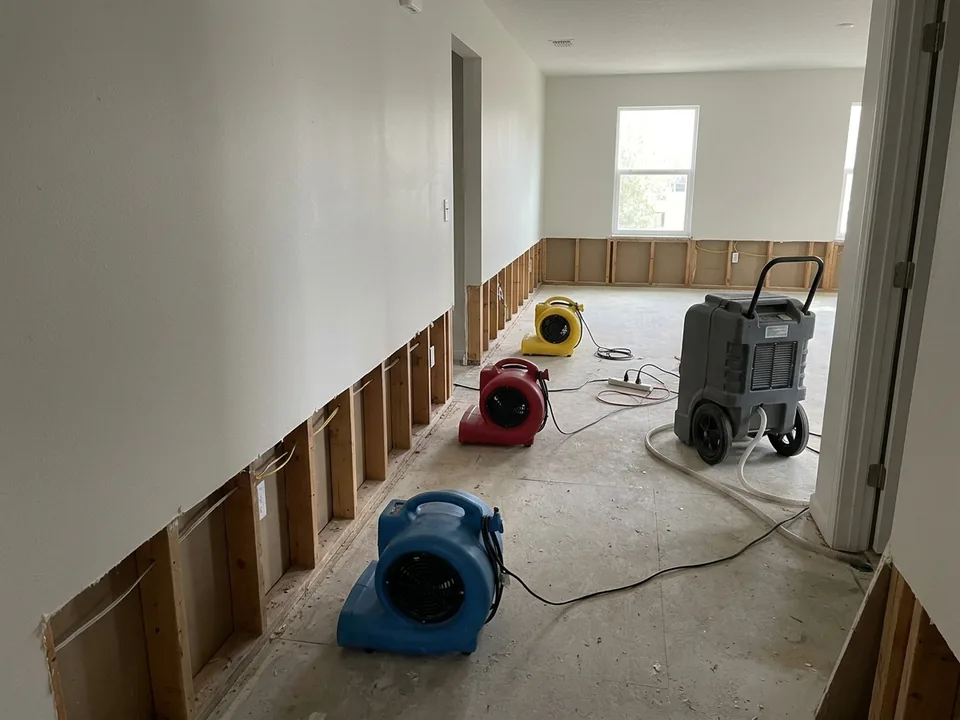
- Immediate Extraction & Contents Protection: Performing emergency water extraction and blocking furniture legs off wet flooring.
- Targeted Wall & Ceiling Drying: Pairing ceiling and drywall stabilization with Injectidry or flood-cut airflow and commercial LGR dehumidification.
- Insurance-Ready Drying Logs: Recording daily psychrometric readings and photo documentation that Washington homeowners insurers typically request for sudden plumbing claims.
Remember that plumbing repair (soldering or repiping the broken line) and water mitigation are often separate trades—independent restoration teams focus on drying and protecting the structure once the leak is isolated. Return to {BRAND} or check our WA homeowners insurance guide.
Frequently Asked Questions
Does a water damage restoration crew fix the broken pipe too?
Restoration technicians specialize in water extraction, moisture mapping, and structural drying. A licensed plumber typically repairs or replaces the burst pipe section, though many local restoration companies coordinate scheduling alongside plumbers.
Why is burst pipe water usually easier to restore than storm flooding?
Pressurized supply-line water starts as clean Category 1 water. If extracted and dried promptly within 24 to 48 hours, more flooring, trim, and framing materials can often be dried in place rather than torn out.
What if the burst pipe happened inside an upstairs wall?
Water follows gravity along framing studs and ceiling joists. Technicians use thermal imaging to check the ceiling directly below and adjacent rooms so hidden damp insulation is not left behind.