
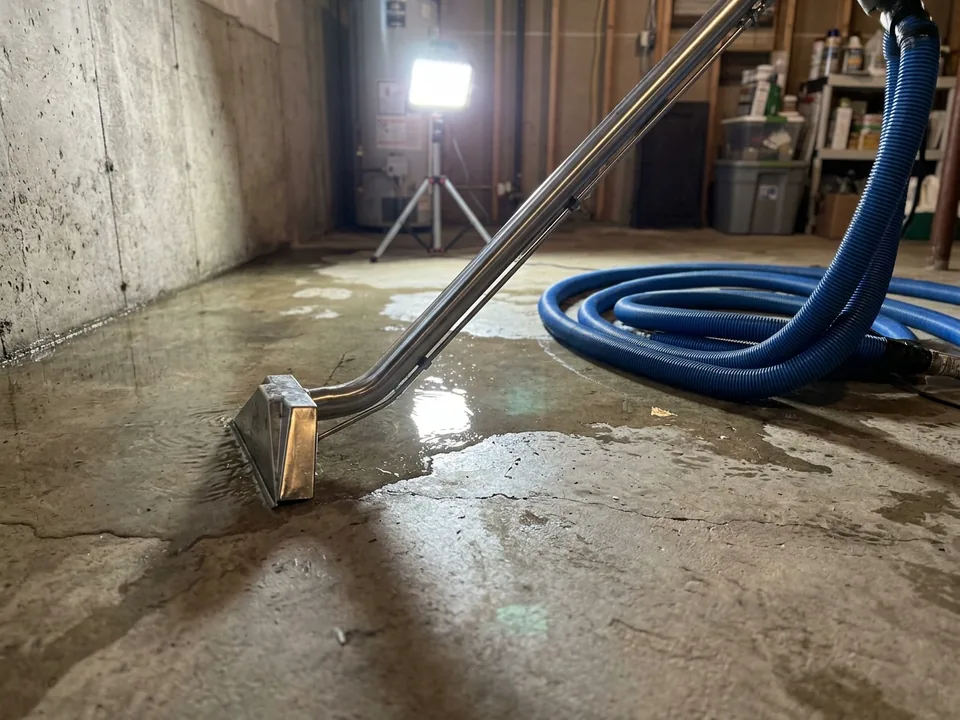
Why Mechanical Water Extraction Must Come First
Whether a washing machine supply hose fails in Echo Lake or a sudden storm pushes water across a garage slab in Richmond Beach, removing physical liquid water is always step one of water damage restoration in Shoreline, WA. Dehumidifiers and air movers are built to evaporate bound moisture—not pull inches of pooled water out of carpet pad or subfloor seams. Mechanical extraction removes the vast majority of water weight quickly, shortening total drying time and reducing the likelihood of subfloor delamination.
What Local Extraction Technicians Typically Do On-Site
- Hazard & Source Check: Confirming water shutoff and checking for energized floor outlets or basement panels before stepping into standing water.
- Water Category Identification: Determining whether the water is clean Category 1 supply water, Category 2 appliance discharge, or Category 3 contaminated runoff to set proper safety and disposal protocols.
- Multi-Pass Bulk Removal: Deploying submersible trash pumps for deep standing water, truck-mounted vacuum hoses for broad floor coverage, and weighted extraction tools that compress carpet pad to pull trapped moisture upward.
- Transition to Structural Drying: Immediately mapping damp perimeters with thermal cameras and launching structural drying and dehumidification so trapped humidity does not migrate into adjacent rooms.
Common Triggers for Emergency Extraction in Shoreline
Homeowners across Parkwood, Ridgecrest, and North City most frequently call for emergency extraction after burst supply pipes, failed 40-to-50-gallon water heaters, overflowing upstairs bathtubs, or heavy fall storms causing basement flooding. If water has also drained into a lower floor cavity, local technicians often pair extraction with crawlspace water removal.
What Influences Extraction Cost
Independent contractors price extraction based on water depth, total square footage, contamination category, flooring material (carpet over pad vs. bare concrete vs. hardwood), and after-hours dispatch timing. For an instant ballpark range before calling, try our Shoreline Water Damage Cost Calculator or review our Shoreline cost breakdown guide.
Frequently Asked Questions
Can a shop vac replace professional emergency water extraction?
A household wet/dry vacuum can pick up small surface puddles on tile, but it lacks the static lift and airflow to pull water out of carpet padding, tack strips, and subfloor joints. Leaving wet padding behind often leads to odors and mold within 48 hours.
How long does the water extraction phase take?
Bulk extraction for a single flooded room or basement typically takes 1 to 4 hours depending on water depth and accessibility, followed by 3 to 5 days of commercial dehumidification.
Should I pull up wet carpet myself before crews arrive?
In most clean-water cases, leave carpet stretched on tack strips until technicians inspect it—improper pulling can tear seams or delaminate backing. Move small wood furniture legs onto foil or plastic blocks to prevent stain transfer.