
Why Shoreline Basements Flood During Puget Sound Storms
Many Shoreline homes—especially mid-century daylight basements perched on sloped lots in Innis Arden, Richmond Beach, and Parkwood—sit over dense glacial till that drains slowly during prolonged November-to-March atmospheric rivers. Hydrostatic pressure builds against foundation walls, forcing water through cove joints, hairline concrete cracks, or overwhelmed window wells. When a basement sump pump fails during a windstorm power outage, inches of water can cover finished rec rooms overnight.
Step-by-Step Flooded Basement Cleanup Process
- Electrical & Structural Safety Check: Verifying that furnace air handlers, water heaters, and lower wall outlets are de-energized before pumping begins.
- Rapid Pump-Out & Extraction: Removing standing water via high-capacity submersible pumps and truck-mount emergency water extraction units.
- Porous Material Triage: Because groundwater entering through soil is classified as Category 3 contaminated water under IICRC S500 guidelines, wet carpet pad and saturated lower drywall typically require controlled removal (often a 12-to-24-inch flood cut) to expose damp studs.
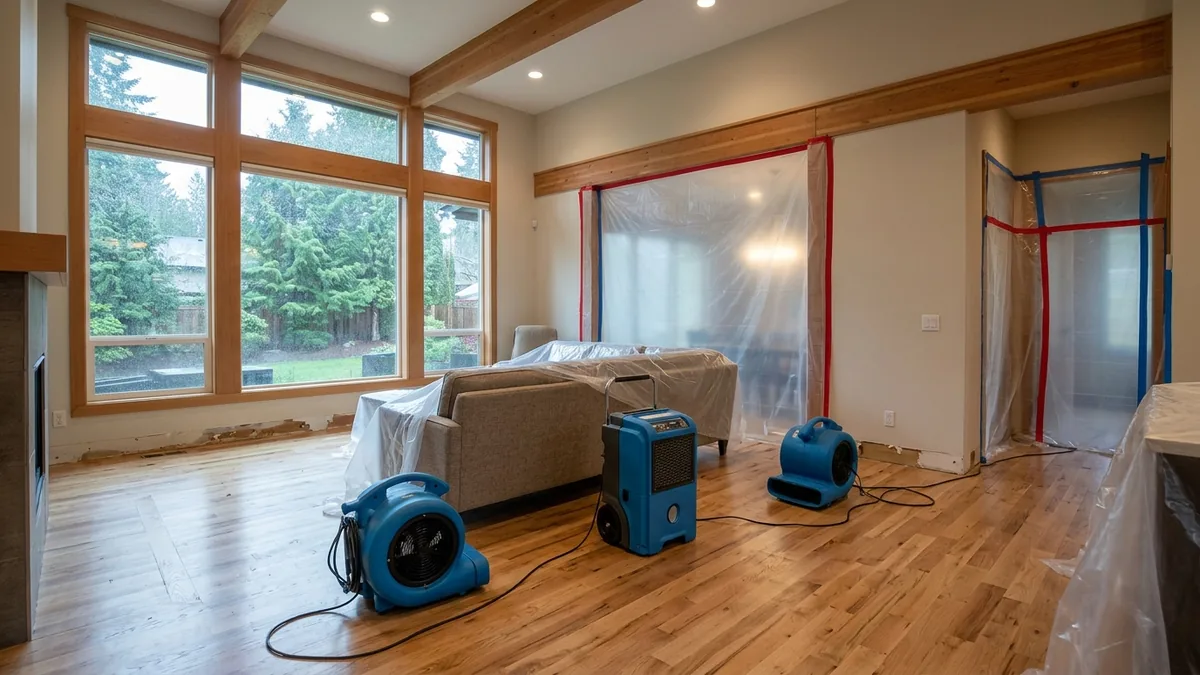
- Sanitization & Deep Structural Drying: Cleaning concrete slabs and framing, then deploying LGR dehumidifiers and axial air movers for thorough structural drying until wood framing reaches target equilibrium moisture content.
Protecting Finished Basements Near Local Creek Basins
Properties near Boeing Creek, Thornton Creek, and McAleer Creek—including blocks in Briarcrest and Ridgecrest—benefit from pairing emergency cleanup with long-term drainage checks. Read our Shoreline Basement Flooding & Drainage Guide for practical insights on downspout extensions, battery-backup sump pumps, and City of Shoreline surface water resources, or return to our Shoreline water damage restoration overview.
Frequently Asked Questions
Is rainwater that seeps through a basement foundation considered clean water?
No. Once rainwater travels across soil, mulch, and concrete foundation walls, it picks up soil microbes and contaminants and is generally treated as Category 3 water, requiring stricter sanitization and porous material removal than a clean pipe leak.
How long does it take to dry out a flooded concrete basement in Shoreline?
Surface pumping finishes within hours, while concrete slabs, bottom wood plates, and exposed wall studs typically require 3 to 6 days of continuous commercial dehumidification.
Will homeowners insurance cover my flooded basement in Shoreline?
Coverage depends on the cause. Sudden indoor plumbing bursts or water heater ruptures are commonly covered, whereas exterior groundwater seepage or overland flooding is usually excluded unless you carry separate flood insurance or a water-backup endorsement.