
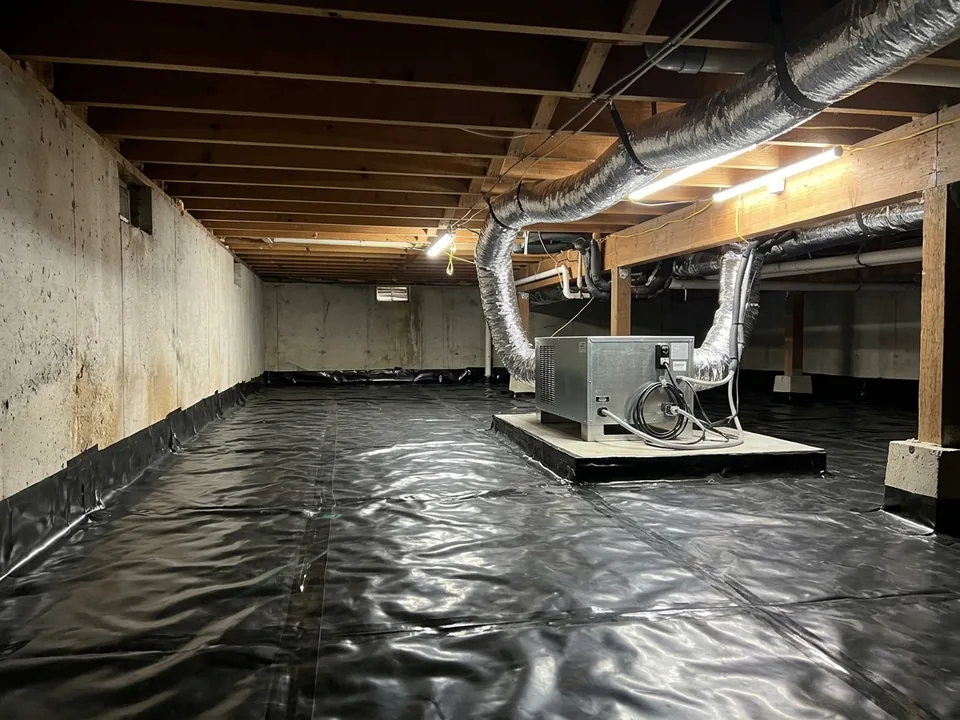
Why Shoreline Crawlspaces Trap Water
Thousands of 1950s and 1960s single-story ramblers across North City, Parkwood, Briarcrest, and Ridgecrest sit over shallow vented crawlspaces. During wet Western Washington winters, clay-rich soils channel roof runoff and high groundwater beneath perimeter footings. Compounding the issue, a hidden supply leak or failed drain line under a bathroom can pool undetected on top of plastic sheeting for weeks until musty odors rise through floor registers or hardwood planks begin cupping.
Signs Your Crawlspace Has Standing Water
- Persistent earthy or musty odors inside living rooms, especially near closets and HVAC vents.
- Cupping, crowning, or squeaking hardwood floors above the crawlspace footprint.
- Condensation fogging on interior window glass even when indoor heating is running.
- Elevated water bills or the sound of running water near foundation vents.
What Crawlspace Water Mitigation Involves
Independent local restoration contractors accessed via {BRAND} start by locating whether the water stems from an active plumbing leak (see burst pipe mitigation) or seasonal drainage intrusion. Technicians deploy submersible pumps and long-run extraction hoses to clear standing water, bag sagging wet fiberglass batts that hold moisture against floor joists, remove torn vapor barriers, and position compact crawlspace dehumidifiers and air movers for structural subfloor drying.
Frequently Asked Questions
Can wet fiberglass insulation in a crawlspace be dried in place?
Generally no. Saturated fiberglass batts lose insulating R-value, sag away from the subfloor, and hold moisture directly against wood joists, accelerating rot and microbial growth. Removal and replacement after joist drying is standard practice.
How does crawlspace water affect indoor air quality upstairs?
Through the stack effect, a significant portion of the air inside a single-story home is drawn upward from the crawlspace. Standing water below quickly raises indoor relative humidity and carries musty odors into living areas.
Do restoration crews also install French drains or sump pumps?
Some independent contractors offer drainage or crawlspace encapsulation referrals, while emergency restoration teams focus first on pumping out standing water and drying the structural framing safely.