
The Science of Drying in Puget Sound's Marine Climate
Shoreline's cool, damp marine air regularly hovers at 70% to 90% outdoor relative humidity from October through May. Simply cracking windows or running box fans pulls more humid air into a wet home, stalling evaporation inside wall cavities and oak subfloors. Professional water damage restoration in Shoreline, WA relies on closed-system psychrometry—balancing air movement, temperature, and vapor pressure so moisture moves continuously out of wet building materials and into commercial LGR dehumidifiers.
Core Components of an IICRC S500-Aligned Drying Plan
- Baseline Dry-Standard Readings: Technicians measure unaffected wood trim or drywall in a dry room of your home to establish the exact moisture percentage target for your specific house.
- Commercial LGR Dehumidification: Units from manufacturers like Dri-Eaz and Phoenix continue extracting moisture efficiently even at lower humidity levels where residential dehumidifiers shut down.
- Calculated Air Mover Placement: High-velocity air movers sweep the humid boundary layer off wet walls, concrete slabs, and exposed joists after emergency water extraction or basement flood pump-out.
- Daily Monitoring & Documentation: Every 24 hours, technicians log indoor temperature, relative humidity, grains per pound (GPP), and pin/pinless meter readings until materials meet the dry goal.
When Specialty Drying Systems Help Save Finishes
In homes throughout Richmond Beach and Innis Arden with custom millwork or solid hardwood floors, independent specialists may deploy floor-drying mat panels or cavity-injection systems to pull moisture from beneath flooring without full tear-out when clean Category 1 water is caught early. Learn more in our IICRC S500 Categories & Drying Guide.
Frequently Asked Questions
How noisy and power-intensive is commercial drying equipment?
Air movers and LGR dehumidifiers produce steady white noise similar to a box fan or shop blower and draw measurable electricity over 3 to 5 days. Many insurance policies consider documented drying electricity as part of a covered mitigation claim—ask your adjuster.
Should I turn off the dehumidifiers at night so my family can sleep?
No. Turning equipment off overnight allows indoor humidity to spike and moisture to re-absorb into partially dried drywall and framing, extending total drying time and increasing mold risk.
How do technicians prove my walls are actually dry?
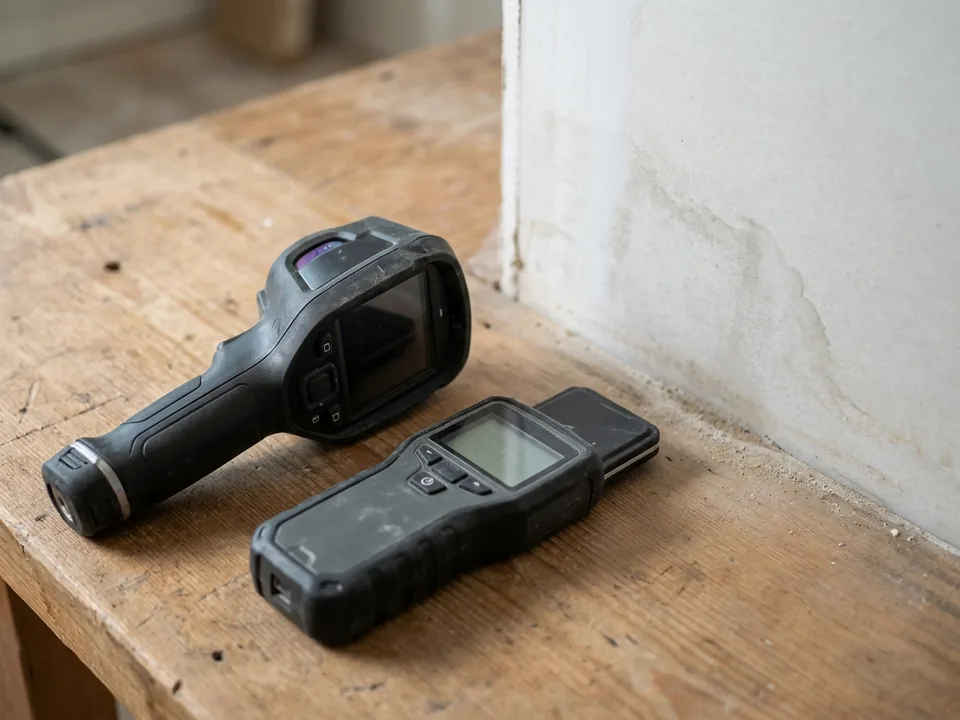
They use calibrated pin and pinless moisture meters (such as Protimeter or Tramex instruments) to confirm affected studs and subfloors match the moisture content of unaffected control areas in your home.