
Why Shoreline's Geography Creates Distinct Drainage Challenges
Shoreline sits on an elevated glacial ridge between Puget Sound on the west and Lake Washington's north tributaries on the east. Beneath a thin layer of topsoil across much of the city lies dense Vashon glacial till—compacted clay, silt, and gravel deposited thousands of years ago. During dry summer months, that soil feels rock-hard. Once Pacific Northwest atmospheric rivers saturate the upper soil profile in November, December, and January, rainwater cannot percolate downward rapidly. Instead, water travels laterally along the top of the glacial till layer—straight toward the lowest excavated cavity on a residential lot: your basement or crawlspace.
Homeowners calling {BRAND} during winter storms experience very different water entry mechanisms depending on which of Shoreline's drainage basins their property occupies. Understanding your local watershed helps you diagnose why water appeared and how to stop it from returning next winter.
Shoreline's Major Creek Basins & Neighborhood Water Risk
| Drainage Basin | Key Shoreline Neighborhoods | Typical Foundation Vulnerability | Primary Mitigation Focus |
|---|---|---|---|
| Boeing Creek & Puget Sound Bluffs | Innis Arden, Richmond Beach, Hillwood | Steep uphill foundation walls on daylight basements; wind-driven rain; hillside curtain drain overload | Flooded basement cleanup, upslope intercept drains, LGR dehumidification |
| Thornton Creek Headwaters | Ridgecrest, Briarcrest, Parkwood | High seasonal water tables near Twin Ponds & creek tributaries; older 1950s concrete block seepage | Submersible pump-out, cove-joint inspection, crawlspace water removal |
| McAleer Creek & Lyons Creek | North City, Ballinger, Echo Lake | Low-lying crawlspaces, aging downspout drywells, and storm runoff pooling behind older curbs | Crawlspace extraction, wet insulation removal, vapor barrier replacement |
Five Ways Stormwater Breaches Shoreline Foundations
1. Hydrostatic Pressure Along the Cove Joint
Where a poured concrete basement wall meets the horizontal concrete floor slab sits a cold seam called the cove joint. Because foundation walls and floor slabs are poured separately, this seam is not inherently waterproof. When winter groundwater rises around the outside of a Parkwood or Innis Arden basement, hydrostatic pressure pushes water right through that joint—often soaking the bottom of finished drywall and carpet tack strips before homeowners notice puddles in the middle of the room.
2. Clogged Gutters & Short Downspouts Under Evergreen Canopies
Neighborhoods with dense Douglas fir and cedar trees—especially Briarcrest, Innis Arden, and western Richmond Beach—shed heavy mats of needles every fall. A single clogged gutter dumps hundreds of gallons of concentrated roof runoff straight against the foundation perimeter during a two-inch storm. Similarly, underground downspout drain lines installed in the 1950s and 1960s frequently crush or fill with tree roots, backing water up right beside basement window wells.
3. Sump Pump Failures During Puget Sound Windstorms
Many daylight basements and low-lying crawlspaces rely on electric sump pumps to lift groundwater up to storm discharge lines. Unfortunately, the exact atmospheric rivers that flood Shoreline sump pits also bring high winds that knock out Seattle City Light power lines. Without a marine battery backup or water-powered backup pump, a pit can overflow in under an hour during peak rainfall.
4. Window Well Overflows
Below-grade basement windows on 1950s cottages in Ridgecrest and Echo Lake depend on gravel-filled window wells tied into perimeter footing drains. When leaves plug the bottom gravel bed, a window well fills like a fish tank until water leaks through the window sash directly onto interior drywall.
5. Saturated Crawlspaces Wicking Moisture Into Main Floors
Even if you do not have a basement, standing winter water inside a vented crawlspace in North City or Briarcrest creates severe structural humidity. Water pools on top of torn plastic sheeting, saturates fiberglass floor batts, and drives moisture upward into oak subfloors and HVAC ductwork.
Why Groundwater Flooding Requires Stricter Cleanup Than a Pipe Leak
A critical technical point many homeowners miss is that rainwater seeping through soil and concrete is not clean Category 1 water. Under IICRC S500 standards (explained further in our Water Damage Categories 1, 2 & 3 Guide), water that contacts exterior soil, fertilizers, lawn debris, or storm drains is classified as Category 3 (contaminated) water.
Because of that classification, proper flooded basement cleanup goes beyond simply vacuuming carpet:
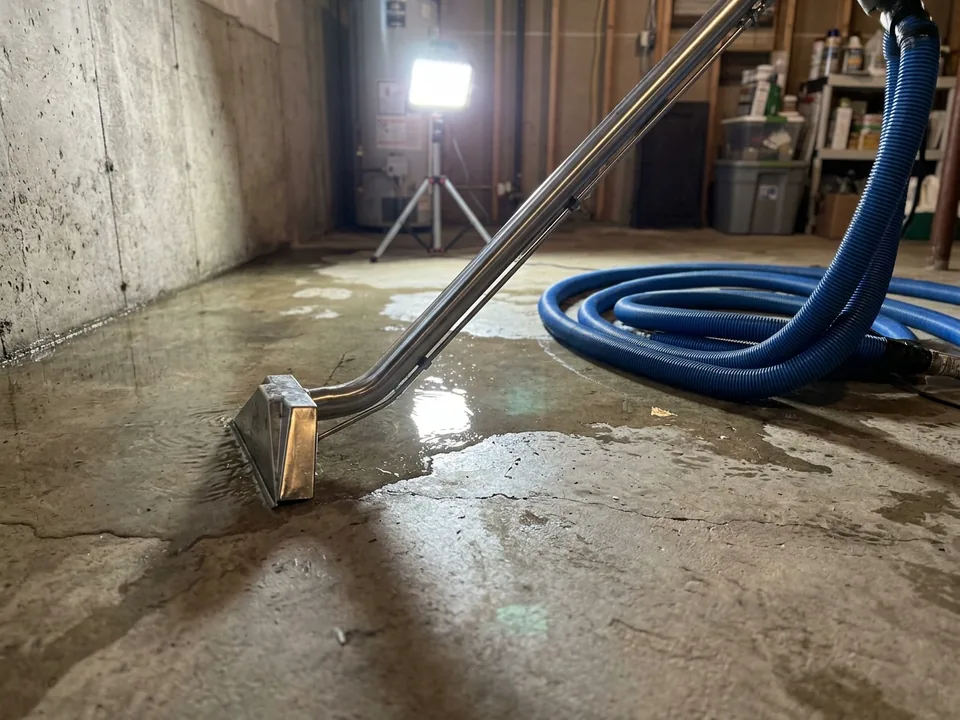
- Immediate Bulk Pump-Out: Clearing standing water with submersible pumps and high-CFM emergency water extraction units.
- Porous Material Removal: Removing and bagging contaminated carpet pad, saturated baseboards, and lower drywall (typically a 12-to-24-inch flood cut) so wall cavities and sill plates can be cleaned and dried thoroughly.
- Antimicrobial Cleaning & Air Filtration: Cleaning concrete slabs and exposed framing studs while running HEPA air scrubbers where needed.
- Commercial LGR Dehumidification: Running continuous structural drying equipment for 3 to 6 days until moisture meters verify framing and slab equilibrium.
City of Shoreline Surface Water & Permit Considerations
The City of Shoreline Surface Water Utility actively manages stormwater pipes, drainage basins, and flood-reduction projects (such as the Boeing Creek Regional Stormwater Facility studies and Hidden Lake Dam removal). While cleaning up interior floodwater and patching non-structural drywall generally does not require a city permit, installing or upgrading exterior drainage systems, stormwater pipes, swales, grading, or foundation waterproofing excavations may require a City of Shoreline Site Development Permit or building permit through Planning and Community Development. Before hiring an excavation or waterproofing contractor to alter yard drainage or tie into city storm infrastructure, verify local permit requirements so runoff is never illegally diverted onto a neighbor's downhill parcel.
Seasonal Prevention Checklist for Shoreline Homeowners
- October & December Gutter Clearing: Clean roof valleys, gutters, and downspout strainers twice every autumn under Douglas fir and cedar trees.
- Test Your Sump Pump Before November Storms: Pour a five-gallon bucket of water into the sump basin to verify the float switch activates smoothly, check the discharge line outdoors for clogs, and consider adding a battery backup.
- Inspect Exterior Grading & Downspout Extensions: Confirm soil slopes away from foundation walls and extend above-ground downspouts at least 6 to 10 feet from footings where lot geometry allows.
- Check Crawlspace Vapor Barriers Annually: Peek inside your crawlspace access hatch after the first heavy November rain to confirm no standing puddles are pooling beneath floor joists.
- Review Insurance Endorsements: Ask your Washington insurance agent about Water Backup and Sump Overflow endorsements or separate flood coverage—see our WA Homeowners Insurance Guide for details.
Need Fast Basement or Crawlspace Pumping in Shoreline?
If winter rain or a failed sump pump has left standing water in your lower level, call {BRAND} at {PHONE_DISPLAY} 24/7 to connect directly with an independent local Shoreline water damage restoration contractor. You can also estimate typical mitigation costs on our Shoreline Cost Calculator or browse all Shoreline neighborhoods.
Choosing the Right Sump Pump & Drainage Upgrades After a Flood
Once emergency flooded basement cleanup and structural drying are complete, many Shoreline homeowners take steps to prevent a repeat loss during the next November storm cycle. While independent emergency restoration crews focus on extraction and drying, discussing these three resilience upgrades with a licensed plumber or drainage contractor can dramatically lower future risk:
- Primary Cast-Iron Sump Pump + Marine Battery Backup: Cast-iron submersible pumps dissipate heat better than plastic units during multi-day atmospheric rivers, and a dedicated battery-backup secondary pump keeps the pit pumping when windstorms knock out power in Richmond Beach, Innis Arden, or Briarcrest.
- Backwater Valve Inspection on Lower-Level Drains: Homes with basement showers, floor drains, or laundry standpipes sitting below street sewer grade can experience backups during extreme surcharges; a licensed plumber can evaluate whether a backwater valve is appropriate and accessible for annual cleaning.
- Smart Leak & Sump Water Alarms: Inexpensive Wi-Fi water-detection pucks placed beside your water heater, sump basin, and crawlspace hatch send instant smartphone alerts the moment water touches the floor—turning a potential weekend-long flood into a minor, manageable cleanup.
Frequently Asked Questions
How do I tell if basement water came from groundwater seepage or a leaking pipe?
Check your water meter while all indoor faucets and appliances are off—if the leak indicator dial spins, you likely have a pressurized plumbing leak. Groundwater seepage typically worsens during or right after heavy rainstorms and enters along the bottom perimeter cove joint or wall cracks.
Can I dry out a flooded Shoreline basement by running a space heater and box fan?
No. Space heaters raise humidity without removing moisture from the air, and box fans cannot extract bound moisture from concrete slabs or wood sill plates in Western Washington's damp climate. Commercial LGR dehumidifiers are required for verified drying.
Does the City of Shoreline inspect interior basement flood cleanup?
Routine emergency water extraction and structural drying do not require city inspection, though structural framing repairs, plumbing replacements, or exterior stormwater drainage installations generally require City of Shoreline permits.