
The Golden Rule of Water Claims: Sudden & Accidental vs. Gradual
When Shoreline homeowners call {BRAND} after discovering wet floors or a stained ceiling, one of the first questions is always, "Will my insurance pay for this?" While only your insurance carrier and your specific policy language can issue a formal coverage determination, Washington residential property policies follow consistent underwriting principles that are worth understanding before you pick up the phone to file a claim.
Insurers draw a sharp line between a sudden, accidental discharge and a gradual, repeated leak. If a braided stainless toilet supply line snaps overnight in your Echo Lake home and floods two rooms, that is a textbook sudden event. Conversely, if a shower pan slowly drips into a subfloor for nine months, rotting joists in a Ridgecrest bathroom without prior repair, adjusters frequently classify it as ongoing maintenance or repeated seepage, which standard policies typically exclude or cap tightly.
Coverage Comparison Table: Common Shoreline Water Scenarios
| Water Damage Scenario | Typical Standard HO-3 Treatment | Important Policy Nuances to Check |
|---|---|---|
| Burst Supply Pipe or Frozen Hose Bibb | Typically covered (resultant water damage) | Policies usually cover extraction, drying, and drywall/flooring repair, but exclude the cost of replacing the broken pipe itself; heat must generally be maintained during cold snaps. |
| Water Heater or Appliance Hose Rupture | Typically covered (resultant water damage) | Covers floor and wall drying from a sudden tank burst or dishwasher hose failure; the failed appliance itself is normally not covered. |
| Wind-Driven Roof Leak After a Storm | Often covered if storm created an opening | If windstorms rip off shingles in Richmond Beach or a branch punctures flashing in Briarcrest, interior water damage is commonly covered; worn-out, unmaintained roofs are often excluded. |
| Sump Pump Failure or Sewer Backup | Excluded unless endorsement added | Requires an optional "Water Backup and Sump Overflow" endorsement, which typically carries a sub-limit (for example, $5,000 to $25,000). |
| Groundwater Seepage or Overland Flooding | Excluded on standard HO-3 policies | Surface water entering a basement in Innis Arden or Parkwood requires separate NFIP or private flood insurance. |
Your Policy's "Duty to Mitigate" Requirement
Nearly every Washington homeowners insurance policy includes a "Duties After Loss" clause requiring you to take reasonable, immediate steps to protect the property from further damage. Waiting five days for an adjuster to visit in person while standing water sits on your subfloor can actually jeopardize coverage for secondary mold growth or severe floor buckling.
That is why emergency water extraction and structural drying usually begin immediately—even before an adjuster inspects the home. Reputable independent restoration contractors document the pre-mitigation condition thoroughly with photos, moisture maps, and itemized drying logs so your adjuster can verify that every step taken was reasonable and aligned with IICRC S500 industry standards.
Should You File a Claim or Pay Out of Pocket?
Before calling your carrier's 1-800 claims line, pause and evaluate two practical numbers: your policy deductible and the estimated total scope (mitigation plus rebuild). Filing a zero-payout claim or a claim barely above your deductible can still appear on your CLUE (Comprehensive Loss Underwriting Exchange) report for several years and potentially affect future renewal premiums.
A practical approach for Shoreline homeowners:
- Stop the water source and stabilize safety first (see our First 24 Hours After a Burst Pipe Checklist).
- Get an on-site moisture inspection from an independent local restoration contractor to learn whether water stayed on the surface or migrated into framing cavities.
- Compare the contractor's written mitigation estimate—plus probable rebuild costs—against your deductible. You can also test ballpark mitigation figures using our Shoreline Cost Calculator and cost guide.
- If the loss clearly exceeds your deductible by a meaningful margin (for instance, multi-room burst pipe water damage or extensive ceiling and drywall damage), open a claim promptly and share your contractor's documentation.
Documentation Package Every Washington Adjuster Expects
Smooth water damage claims are built on objective measurements rather than verbal descriptions. Ask your independent restoration contractor to provide a complete digital documentation packet containing:
- Timestamped Before, During, and After Photos: Clear shots of the water source, standing water perimeter, protective containment, demolition flood cuts, and placed equipment.
- Initial & Daily Psychrometric Logs: Daily indoor and outdoor temperature, relative humidity, and grains-per-pound (GPP) readings demonstrating why commercial LGR dehumidifiers were needed for the stated number of days.
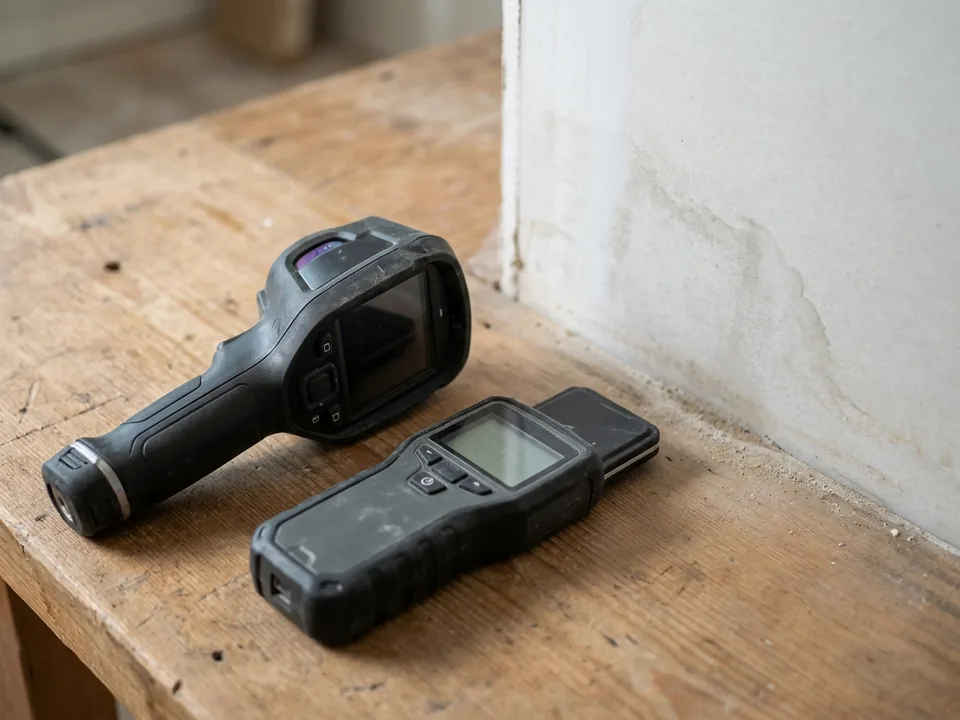
- Moisture Content Map: Room-by-room floor plan showing baseline dry readings from unaffected wood/drywall alongside daily pin/pinless meter drops until dry standards were achieved.
- Line-Item Mitigation Invoice: Transparent breakdown of extraction, labor, disposal, and daily equipment counts separated cleanly from any future reconstruction bid.
- Plumber's Cause-of-Loss Invoice: A brief written statement on the plumber's invoice identifying the exact failed component (for example, "sudden failure of 3/8-inch braided supply line under kitchen sink").
Choosing Your Own Contractor vs. an Insurer's Preferred Vendor
Under Washington consumer insurance principles, homeowners have the right to choose their own qualified, licensed restoration contractor—you are not legally required to use a carrier's preferred vendor network, though preferred vendors sometimes streamline direct billing. Whichever independent contractor you select, confirm up front whether they bill you directly (with you seeking reimbursement from your carrier) or coordinate directly with your adjuster, and verify their Washington State contractor registration and insurance before signing any work authorization.
Need to connect with an independent local water restoration contractor in Shoreline right now? Call {PHONE_DISPLAY} 24/7, or review our Shoreline Water Damage FAQ Hub for more pre-call answers.
Key Washington Insurance Terms Every Shoreline Homeowner Should Understand
Reading a homeowners policy declarations page during a stressful water emergency is rarely easy. Familiarizing yourself with five core claim terms helps you ask targeted questions when speaking with your Washington insurance agent or desk adjuster:
- Replacement Cost Value (RCV) vs. Actual Cash Value (ACV): RCV pays to replace damaged drywall, flooring, or cabinetry with comparable new materials without deducting depreciation (usually releasing recoverable depreciation once repairs finish), whereas ACV deducts age-based depreciation from your payout.
- All-Peril Deductible: The fixed dollar amount (commonly $1,000 to $2,500 on King County policies) subtracted from your covered loss payout. Mitigation and reconstruction together count toward a single covered occurrence.
- Additional Living Expenses (ALE / Loss of Use): If a major Category 3 loss or extensive multi-room basement and main-floor flood makes your Shoreline home temporarily uninhabitable during drying and rebuild, ALE coverage can reimburse reasonable hotel and meal differentials up to policy limits.
- Ordinance or Law Coverage: Helpful for older 1940s–1960s homes in Ridgecrest, Parkwood, or North City where opening wet walls exposes outdated electrical wiring or plumbing that must be brought up to current City of Shoreline / Washington State code during reconstruction.
- Mold / Fungi Sub-Limit: Even when a sudden pipe burst is covered, many Washington policies cap microbial remediation at a lower sub-limit (often $5,000 or $10,000)—another strong reason to start emergency water extraction within the first 24 hours so mold never gains a foothold.
Common Pitfalls That Delay Water Damage Claim Approvals
Most claim delays stem from missing evidence rather than coverage disputes. Avoid discarding the failed supply hose or burst pipe fitting before your adjuster reviews photos; avoid signing vague open-ended contracts without a written scope; and keep a simple notebook logging every phone call date, adjuster name, claim number, and independent contractor invoice. Maintaining clear separation between mitigation invoices (extraction and drying) and reconstruction bids (drywall, paint, flooring) also helps adjusters approve initial mitigation payments without waiting for final flooring selections. If you are ever unsure about policy timelines, Washington's Office of the Insurance Commissioner provides free consumer guidance on residential property claim standards.
Frequently Asked Questions
Does Washington homeowners insurance pay for the plumber to fix a burst pipe?
Typically no. Standard homeowners policies usually cover the resulting water damage—extraction, structural drying, drywall, and flooring—while the homeowner pays for the plumbing repair to the broken pipe itself.
What is a Water Backup and Sump Overflow endorsement?
It is an optional policy add-on that covers damage when a basement sump pump fails or a municipal/private drain backs up into the home. Because standard policies exclude these events, Shoreline homeowners with daylight basements often add this endorsement.
Should I wait for my insurance adjuster before starting water extraction?
No. Policies require you to mitigate ongoing damage promptly. Document everything with photos and videos first, then proceed with emergency extraction and drying while keeping all moisture logs for your adjuster.