
Why Sagging Ceilings & Wet Drywall Need Immediate Evaluation
Gypsum drywall acts like a rigid sponge—once saturated from an upstairs tub overflow, a failed toilet wax ring, a leaking second-floor supply pipe, or wind-driven roof flashing failure in Echo Lake or Richmond Beach, drywall loses structural cohesion rapidly. Water pooling above painted ceiling panels adds dozens of pounds of hidden weight that can cause sudden ceiling collapse onto furniture or flooring below.
How Technicians Stabilize & Dry Wet Ceilings and Walls
- Thermal & Meter Mapping: Scanning ceilings and adjacent walls with infrared cameras and pinless meters to trace the true wet perimeter—water often travels several feet along joists before dripping through a light fixture.
- Controlled Drainage & Containment: Setting plastic sheeting over furnishings and relieving trapped ceiling water pockets safely before drywall fails.
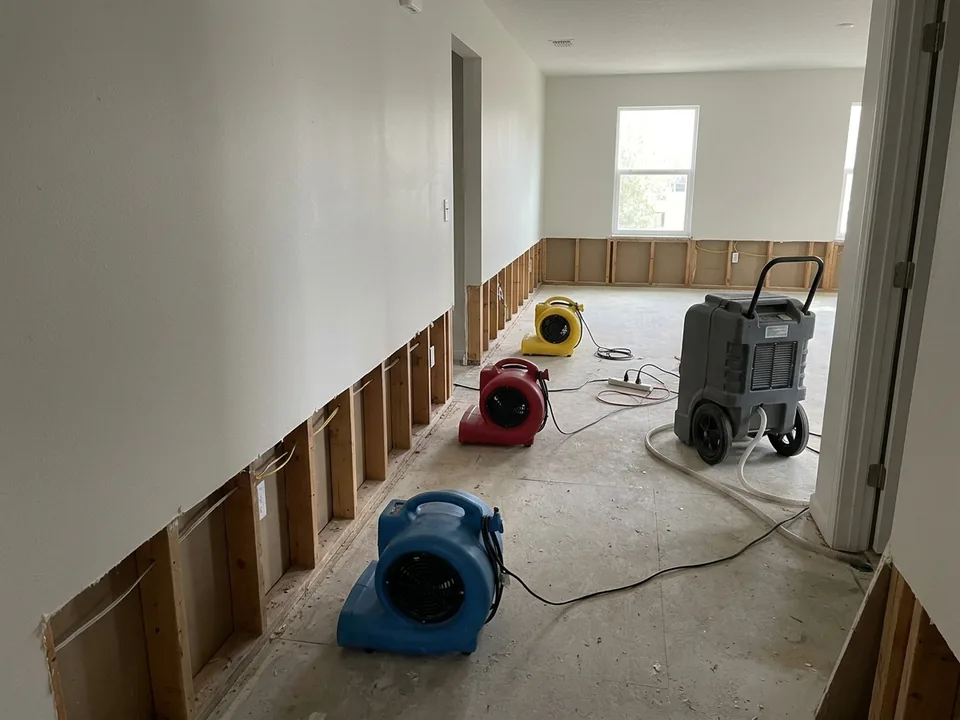
- Selective Removal vs. In-Place Drying: Clean Category 1 moisture in minor wall sections can sometimes be dried by pulling baseboards and opening small vent holes behind trim. Heavily saturated, sagging, or contaminated drywall and wet insulation require clean flood cuts to expose wood studs and ceiling joists.
- Verified Structural Drying: Running commercial LGR dehumidifiers and air movers until framing lumber reaches dry standards, preparing the space for smooth drywall re-hanging and texture matching.
City of Shoreline Permit Note for Drywall Repairs
Like-for-like non-structural drywall patching after water drying generally does not require a City of Shoreline building permit, whereas altering structural framing, relocating walls, or updating electrical/plumbing rough-ins typically does. Return to {BRAND} or estimate your scope with our Shoreline Cost Calculator.
Frequently Asked Questions
Should I poke a hole in a bulging water-filled ceiling myself?
Only if a collapse looks imminent and you can stand safely to the side with a large bucket below—never stand directly underneath a sagging ceiling, and turn off the circuit breaker for any nearby recessed lights or ceiling fans first.
Can wet drywall just be painted over with stain-blocking primer once it dries?
If drywall has swelled, sagged, crumbled, or absorbed Category 2/3 water, painting over it traps weakened gypsum and potential microbial growth. Minor clean-water stains on structurally sound, meter-verified dry drywall may be primed and repainted.
Why do restoration crews cut drywall 12 to 24 inches above the water line?
Gypsum paper wicks water upward by capillary action above the visible waterline, and cutting cleanly at standard sheetrock heights (such as 24 or 48 inches) makes final drywall replacement faster and smoother.